
 Overview
 Itinerary
 Includes
 Map & Altitude
 Equipment
 Trip Info & FAQs
Mr. Gyaljen Sherpa
Mr. Gyaljen Sherpa was born and raised in the Everest region, and his Sherpa heritage gives him deep, lifelong knowledge of the mountains, local commu...
View Profile








The 15 days Manaslu Circuit Trek is one of Nepal's most rewarding trekking adventures, offering a perfect mix of mountain scenery, traditional villages, rich culture, and high-altitude adventure. Unlike the busier trekking routes, the Manaslu region remains peaceful, allowing trekkers to experience the Himalayas in a more authentic way.
The journey begins with a scenic drive from Kathmandu to Machha Khola before following the Budhi Gandaki River through forests, waterfalls, suspension bridges, and charming mountain villages. As you gain altitude, the landscape changes dramatically; from lush green hills to alpine meadows and snow-covered peaks.
Along the trail, you'll pass traditional Gurung and Tibetan-influenced settlements like Jagat, Deng, Namrung, Samagaun, and Samdo. Ancient monasteries, colorful prayer flags, mani walls, and breathtaking Himalayan views make every day memorable.
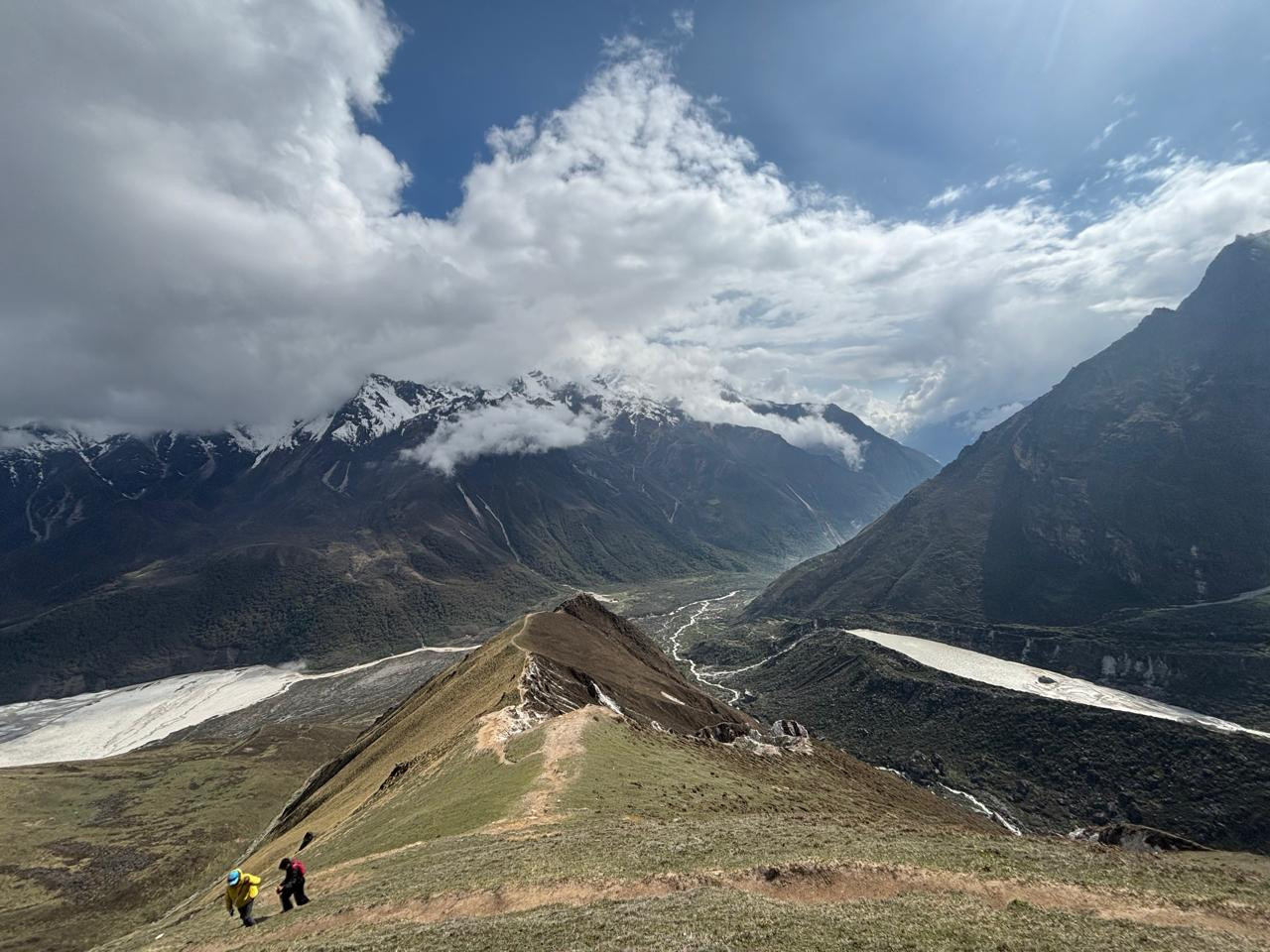
One of the biggest highlights of the trek is crossing the spectacular Larkya La Pass (5,160 m), one of Nepal's highest and most scenic mountain passes. From the top, you'll enjoy panoramic views of Manaslu, Himlung Himal, Cheo Himal, Kang Guru, and Annapurna II before descending into the beautiful valley of Bhimtang.
Whether you're looking for adventure, cultural experiences, or untouched mountain landscapes, the Manaslu Circuit Trek offers an unforgettable Himalayan journey.
Upon your arrival at Tribhuvan International Airport in Kathmandu, our representative will warmly welcome you and transfer you to your hotel. After checking in, you will have time to relax and recover from your journey. In the evening, you will attend a detailed trip briefing where your trekking guide will explain the itinerary, trail conditions, safety procedures, and altitude awareness. You can also use this time to make any last-minute purchases or rent trekking equipment in the vibrant streets of Thamel. Overnight stay at a hotel in Kathmandu.
After breakfast, enjoy a full day exploring the cultural and historical treasures of Kathmandu Valley. Visit UNESCO World Heritage Sites such as Swayambhunath (Monkey Temple), Pashupatinath Temple, Boudhanath Stupa, and Kathmandu Durbar Square, each offering a unique glimpse into Nepal's rich heritage and religious traditions. In the afternoon, enjoy free time for shopping in Thamel, where you can purchase trekking gear, handicrafts, pashmina products, souvenirs, or traditional Nepali artwork. Return to your hotel in the evening for a final preparation before beginning your Himalayan adventure. Overnight stay in Kathmandu.
Your adventure begins with a scenic drive from Kathmandu through winding mountain roads, terraced farmlands, and riverside villages. Following the Trishuli and Budhi Gandaki rivers, you'll enjoy changing landscapes as you leave the city behind. After passing through Arughat and Soti Khola, you'll arrive at the peaceful village of Machha Khola, where you'll spend your first night before starting the trek.
Today's trail follows the Budhi Gandaki River through forests, narrow valleys, and traditional villages. You'll cross several suspension bridges, pass natural hot springs at Tatopani, and walk alongside beautiful waterfalls. After climbing a series of stone steps, you'll reach Jagat, a charming stone-paved village and the official entry point to the Manaslu Conservation Area.
Leaving Jagat, the trail ascends through lush forests and small settlements while offering occasional views of the surrounding mountains. You'll cross suspension bridges over the Budhi Gandaki River and pass through villages such as Salleri, Philim, and Ekle Bhatti. As you continue toward Deng, the influence of Tibetan culture becomes more noticeable in the local architecture and traditions.
Today's trek takes you through peaceful pine forests, riverside trails, and traditional villages. You'll cross several wooden and suspension bridges before entering the upper Manaslu region. Along the way, you'll see mani walls, prayer wheels, and colorful prayer flags. Upon reaching Namrung, enjoy stunning views of Ganesh Himal and the surrounding snow-capped peaks.
Today's trail climbs steadily through alpine forests and traditional Tibetan-influenced villages. Along the way, you'll enjoy stunning views of snow-capped peaks as the landscape becomes more rugged and dramatic. Upon reaching Lho, visit the famous Ribung Monastery, one of the region's most important Buddhist monasteries, and take in breathtaking views of Mt. Manaslu (8,163 m) rising above the village. Lho is a peaceful settlement known for its rich culture, prayer flags, and spectacular mountain scenery.
Leaving Lho, the trail passes through the scenic village of Shyala, surrounded by magnificent Himalayan peaks. Along the way, you'll walk past ancient chortens, mani walls, grazing yak pastures, and traditional stone houses while enjoying panoramic views of Mt. Manaslu, Himal Chuli, Ngadi Chuli, and Peak 29. After a gradual ascent, you'll arrive at Samagaun, one of the largest and most culturally significant villages in the Manaslu region. The village serves as the main acclimatization stop before heading toward higher elevations and offers incredible views of the surrounding mountains.
To help your body adjust to the higher altitude, you'll spend a full day in Samagaun. You can explore the traditional village, visit the nearby Pungyen Monastery, or take an optional hike to Birendra Lake or Manaslu Base Camp for spectacular mountain views. This rest day greatly improves your chances of safely crossing the high pass later in the trek.
Today's trek is shorter but offers incredible alpine scenery. The trail follows wide valleys with views of glaciers, towering peaks, and grazing yaks. As you approach Samdo, you'll notice the strong Tibetan influence in the local culture. This small village near the Nepal–Tibet border is the final permanent settlement before the Larkya La Pass.
The trail gradually climbs over rocky terrain while offering breathtaking views of the surrounding Himalayan ranges. You'll cross glacial streams and alpine landscapes before reaching Dharamsala, also known as Larkya Phedi. This small settlement serves as the base camp for crossing the Larkya La Pass the following morning.
This is the most challenging and rewarding day of the trek. Starting before sunrise, you'll make a steady climb toward Larkya La Pass, the highest point of the journey. From the summit, enjoy breathtaking panoramic views of Mt. Manaslu, Himlung Himal, Cheo Himal, Kang Guru, and Annapurna II. After spending time at the pass, descend through snowfields, glacial moraines, and alpine valleys before reaching the beautiful village of Bhimtang for an overnight stay.
The trail descends through rhododendron forests, alpine meadows, and picturesque villages while following glacial rivers. As you lose altitude, the vegetation becomes greener, and you'll pass through settlements like Gho before arriving at Dharapani. This village marks the point where the Manaslu Circuit connects with the famous Annapurna Circuit Trek.
After breakfast, begin your scenic drive back to Kathmandu. The journey passes through mountain villages, river valleys, terraced hillsides, and beautiful countryside before returning to the capital. Upon arrival, your unforgettable Manaslu Circuit Trek comes to an end with lasting memories of Nepal's remote Himalayas, rich culture, and breathtaking mountain landscapes.
After breakfast, depending on your international flight schedule, our representative will transfer you to Tribhuvan International Airport for your onward journey. Depart Nepal with unforgettable memories of crossing the Larke la Pass, experiencing the unique culture of the Manaslu region, and witnessing some of the world's most spectacular Himalayan landscapes.
Let's customize this itinerary as per your time and budget, as you like.
Tick items off as you pack — your progress is saved on this device.
No gear matches that search. Try a different word.
Down jackets, sleeping bags and trekking poles can be hired or bought inexpensively in Kathmandu and Namche Bazaar — ask our team and we will arrange it before you set off.
We are a team of professionals who share a common devotion to the outdoors — government-licensed, altitude-trained, and with you from Lukla to the summit.
Our TeamMr. Gyaljen Sherpa was born and raised in the Everest region, and his Sherpa heritage gives him deep, lifelong knowledge of the mountains, local commu...
View Profile
Sikendar Chaudhary (CK) is a licensed professional trekking guide from Nepal with over 5 years of experience leading unforgettable adventures across t...
View Profile
The Manaslu Circuit is located in the remote Nepali Himalayas, near the border of Tibet. It circles Mount Manaslu, the world’s eighth-highest peak, offering trekkers an immersive experience in a less crowded region of Nepal.
The main highlights include panoramic views of peaks like Ganesh Himal, Shringi Himal, Ngadi Chuli, and Annapurna II; trekking across Larkya La Pass (5,106 m), the highest point on the trek; and visits to traditional villages like Samagaun, Samdo, and Tibetan-style villages, showcasing diverse flora, fauna, and cultures.
The Manaslu Circuit Trek is challenging and best suited for those with good fitness levels. However, if you are normally fit and have the necessary preparation and determination, you can complete this trek. Please note that the fitter you are, the more you will enjoy your trek.
The Manaslu Circuit offers a remote, uncrowded experience with stunning views of the Himalayas, unique Tibetan and Nepali cultural interactions, and varied landscapes—from dense forests to rugged mountain passes. Its blend of Hindu and Buddhist cultures, proximity to Tibet, and challenging yet rewarding trails set it apart from other popular routes like the Annapurna Circuit or Everest Base Camp trek.
You’ll stay in the best teahouses or lodges along the route. These are cozy accommodations, offering a bed, blankets, and shared facilities.
Yes, most teahouses have electricity for charging and limited hot shower facilities, but you have to pay for them. The higher you go, the fewer amenities are available, and additional charges may apply.
Wi-Fi and charging points are available in most teahouses, usually for a fee. However, they may be slow and reliability can vary with altitude.
You’ll drive from Kathmandu to Machha Khola, the trek’s starting point.
No domestic flights are required. The journey to Machha Khola is by road.
After reaching the endpoint in Dharapani, you’ll drive back to Kathmandu. Some trekkers opt for a private jeep (for an extra cost) to travel more comfortably.
Yes, due to the restricted area regulations, you must have a licensed guide for this trek.
Your guide will navigate the route, manage permits, and provide local insights, while porters carry your main luggage so you can trek with just a daypack.
No, trekking independently is not allowed due to the restricted permit requirements; a guide is mandatory.
You’ll enjoy local, Nepali, Tibetan-influenced, and Western meals. Meals are filling and cater to the high-energy needs of trekkers. We recommend you at least try staple Nepali food, dal bhat and tarkari (lintels, rice, and vegetables).
Safe drinking water is available. You can buy bottled water at en-route shops. However, for ecological reasons, we encourage you to carry a water bottle and buy boiled/filtered water from the teahouses. For additional safety, we recommend you use water purification tablets or a portable filter.
Yes, vegetarian and vegan options are available. However, let your guide know your preferences early on the trek.
The best times are during the spring (March to May) and autumn (September to November) when the weather is stable and visibility is ideal.
Clear weather enhances the views and trail conditions, while rain or snow can make sections challenging. You must be prepared for sudden weather changes, especially at higher altitudes.
Trekking during monsoon (June to August) and winter (December to February) is possible but more challenging due to rain, snow, and potential route closures. Extra gear and preparation are essential.
Altitude sickness is a primary concern, you need to acclimatize properly. Other risks include dehydration, cold, and injuries from the rugged terrain.
Yes, altitude sickness can be a risk. Your itinerary should include acclimatization days, and you should hydrate, walk at your own pace, and drink plenty of fluids.
In emergencies, our guides will assess the situation and arrange helicopter evacuation (funded by insurance) if needed. Hence, make sure your insurance covers evacuation.
Yes, travel insurance is essential. We retain the right to refuse anyone with improper insurance from participating in the trek.
Your insurance should cover health care costs as well as helicopter evacuation upto the highest trek altitude during emergencies.
Yes, you’ll need a tourist visa. You can get it on arrival at Tribhuvan International Airport in Kathmandu or apply online in advance. For an on-arrival visa, you will need a visa with at least six months of validity, a passport-size photo, and a visa application fee. The visa application fee depends on your intended length of stay. The current rate is USD 50 for a 30-day stay.
Bring warm clothing, a sleeping bag, trekking boots, a down jacket, a raincoat, sun protection, and a first aid kit. A well-prepared backpack will make your trek more comfortable.
Though the lodges have bedding, you can bring a sleeping bag rated for sub-zero temperatures for extra warmth.
You can bring trekking poles for stability on uneven trails and to reduce knee strain during steep descents. And crampons are mandatory for the pass which could be very snowy and sleepery.
You’ll need a Restricted Area Permit (RAP) for Manaslu, as well as the Manaslu Conservation Area Permit (MCAP) and Annapurna Conservation Area Permit (ACAP).
Yes. If you book with us(Himalayan Shepherd), we typically handle all necessary permits as part of the package.
You can obtain the permits in Kathmandu through the Nepal Tourism Board at Bhrikutimandap. However, if you book this trek with us, we will acquire all the permits for you.
It’s best to book at least a month in advance, especially during peak seasons. Early booking ensures the availability of permits and accommodation.
We require 10% of the trek cost as an advance to book this trek. You can pay this amount using bank transfer, credit card, Wise, or Western Union.



 UK Representative
  Nepal - Guide & Sales