
 Overview
 Itinerary
 Includes
 Map & Altitude
 Equipment
 Trip Info & FAQs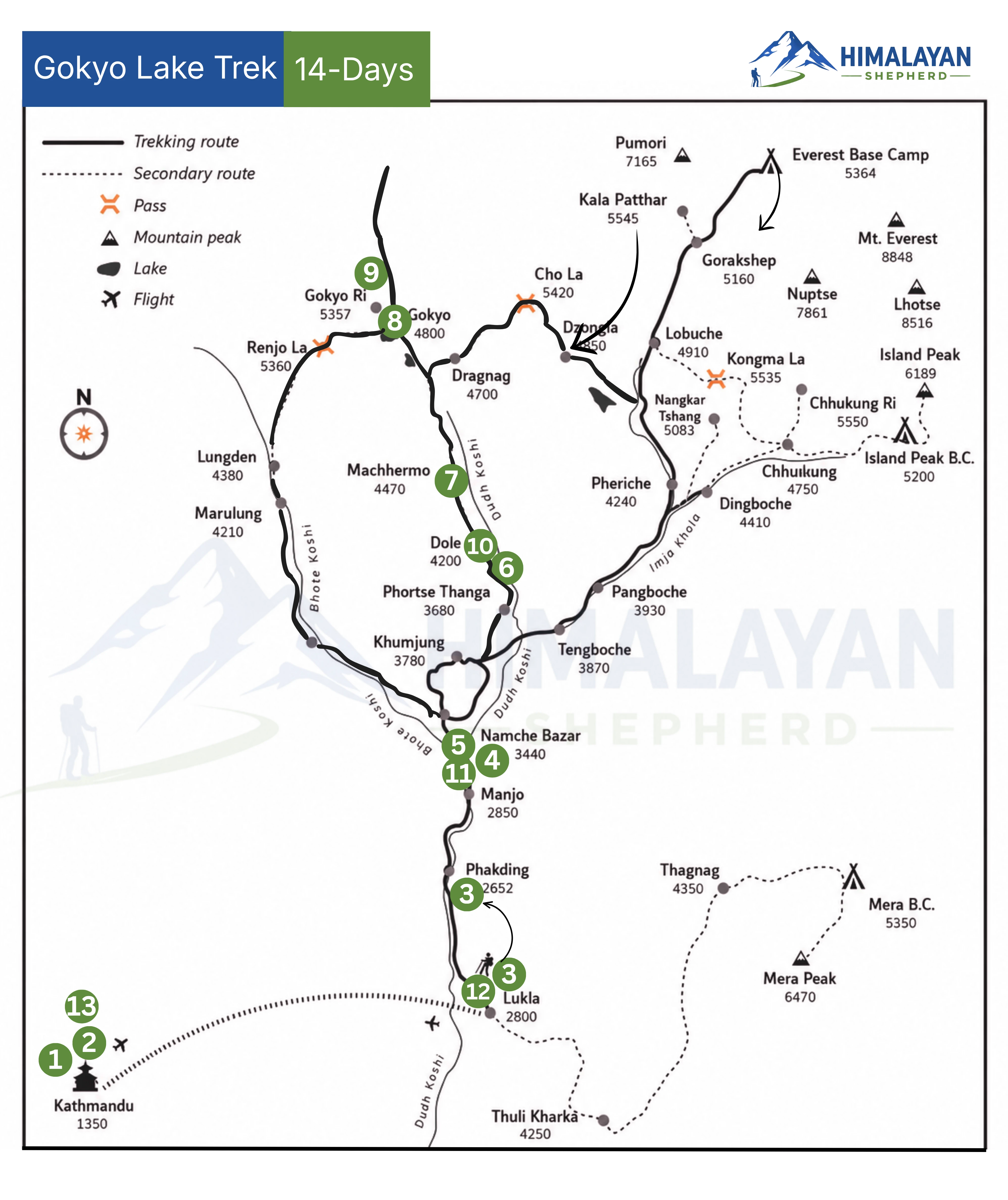
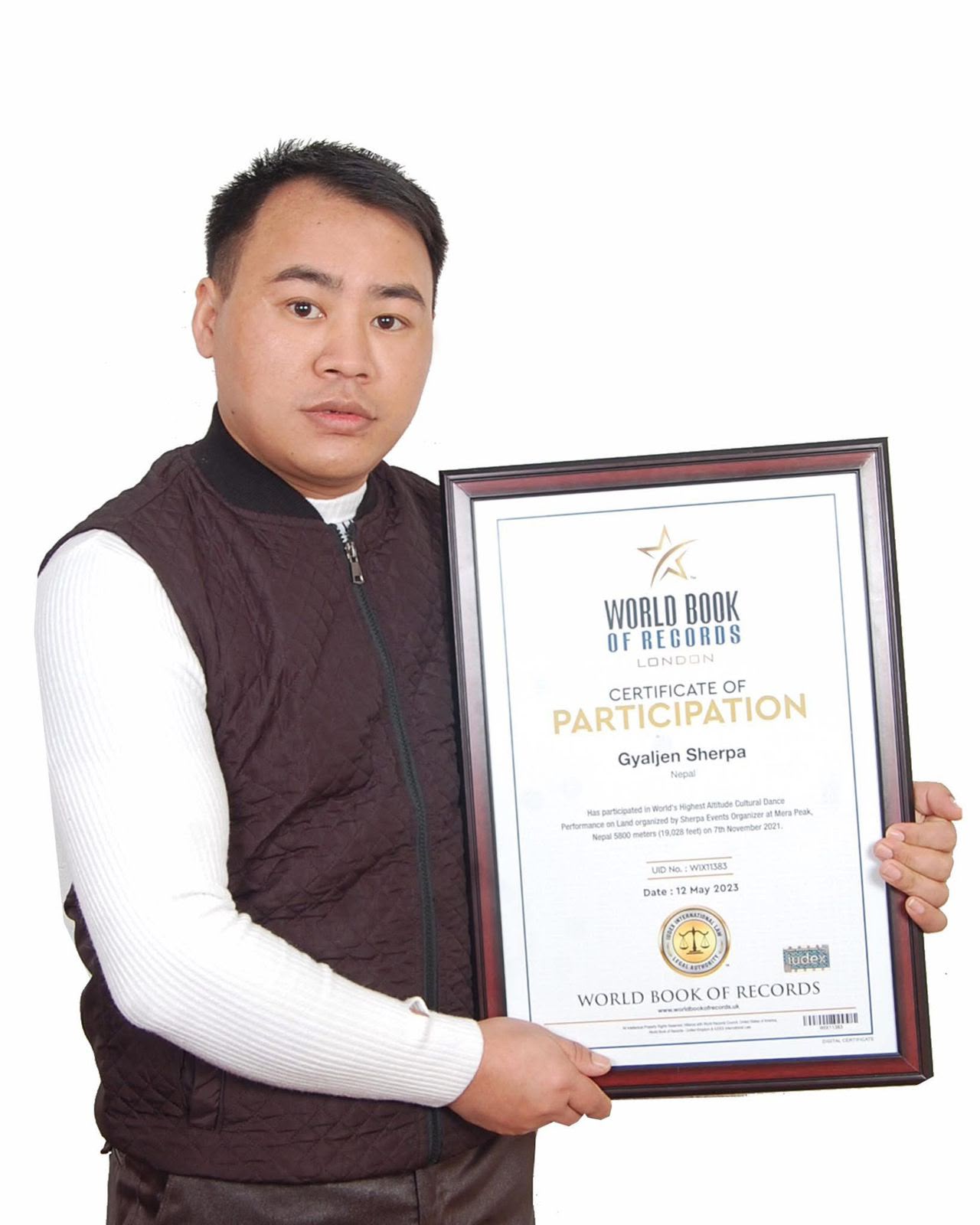
Mr. Gyaljen Sherpa
Mr. Gyaljen Sherpa was born and raised in the Everest region, and his Sherpa heritage gives him deep, lifelong knowledge of the mountains, local commu...
View Profile
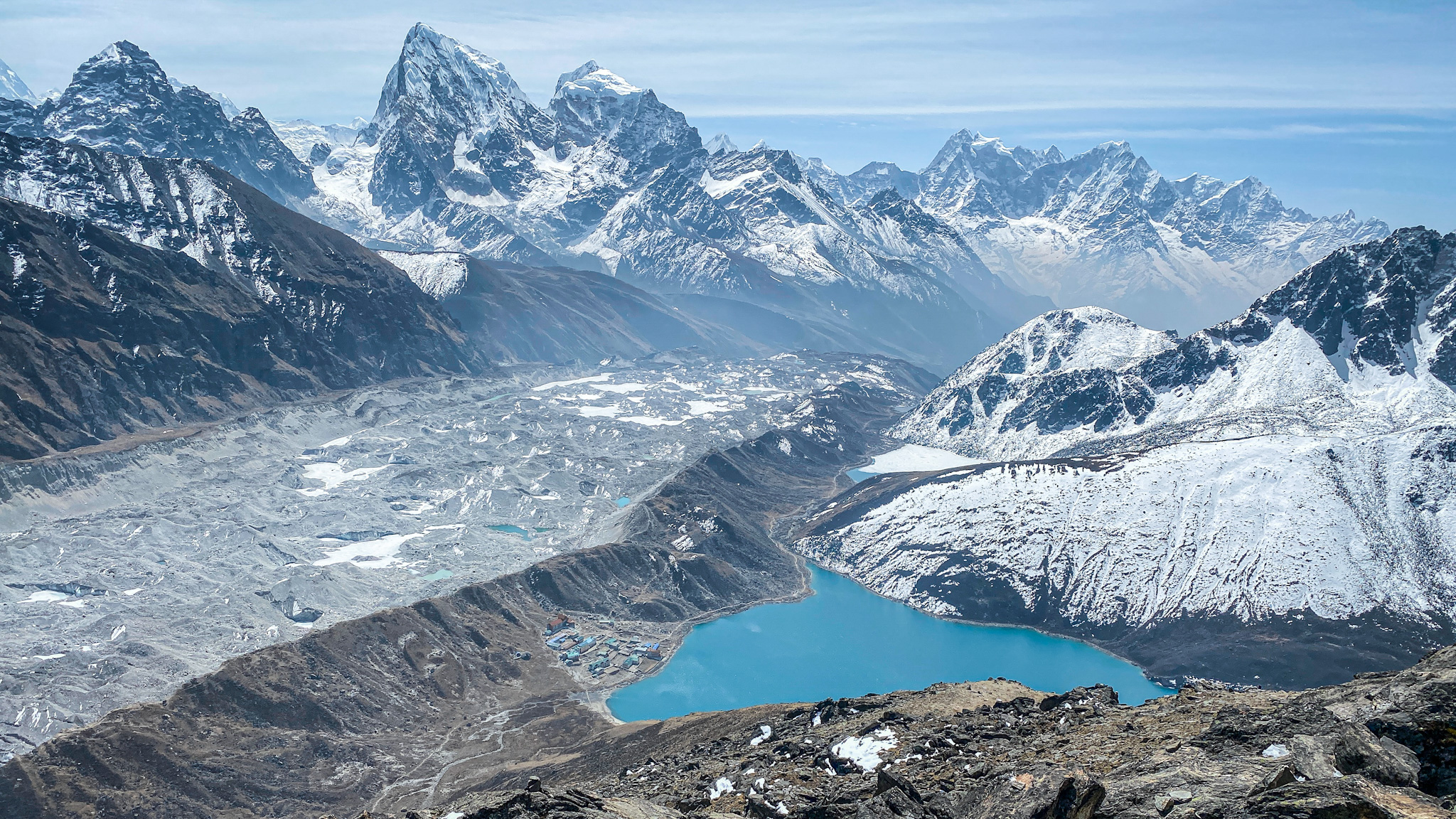
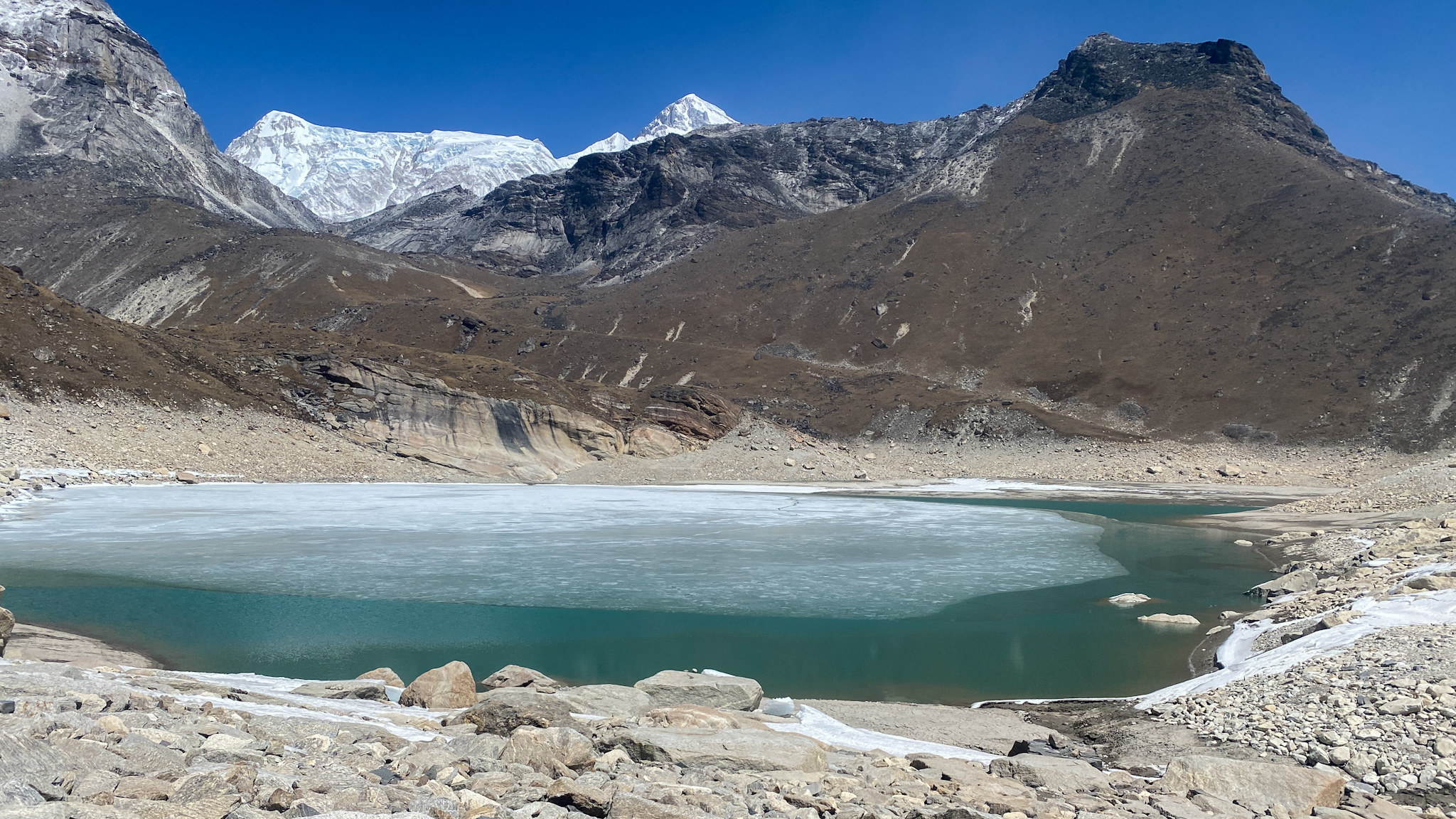
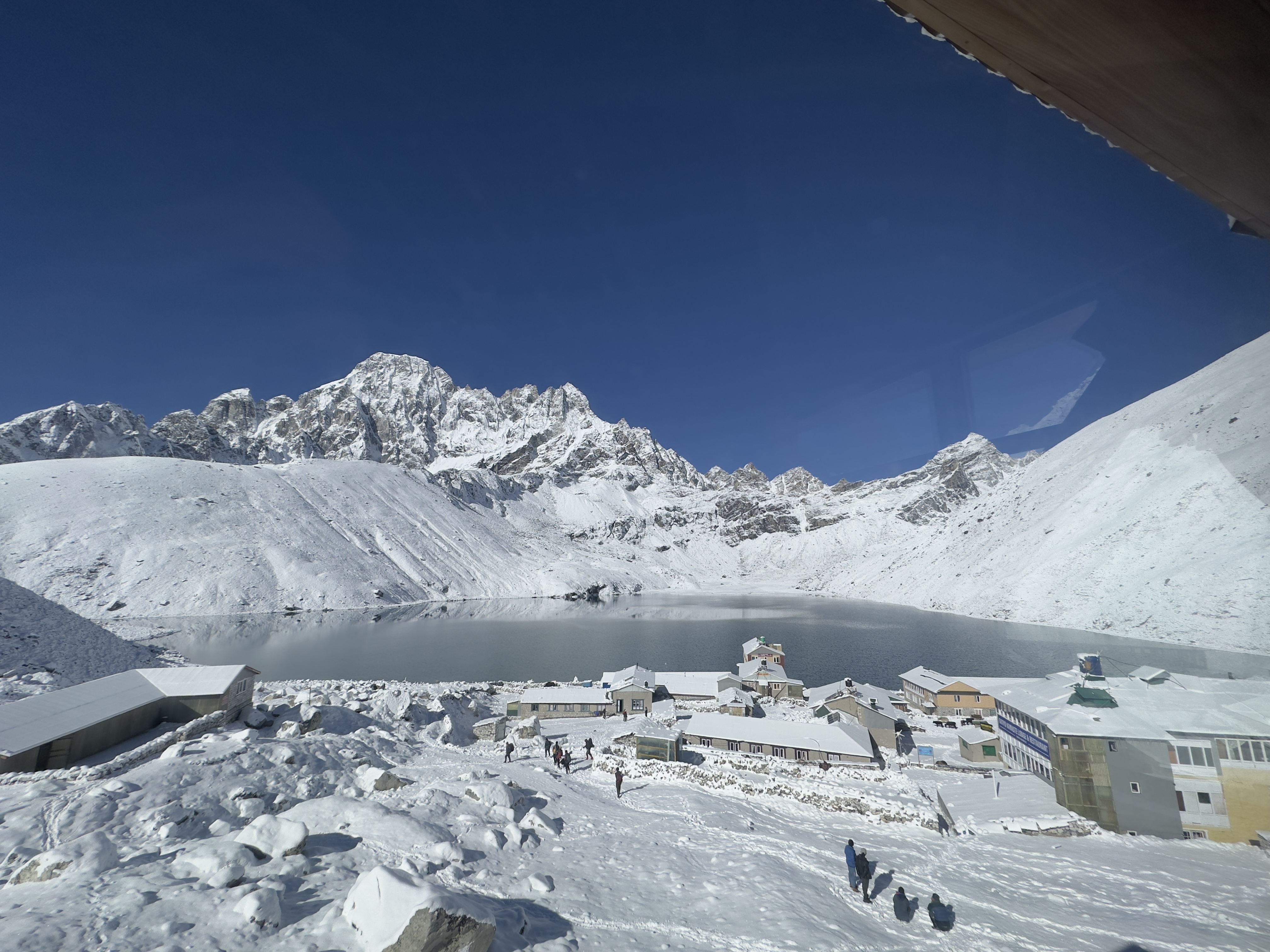

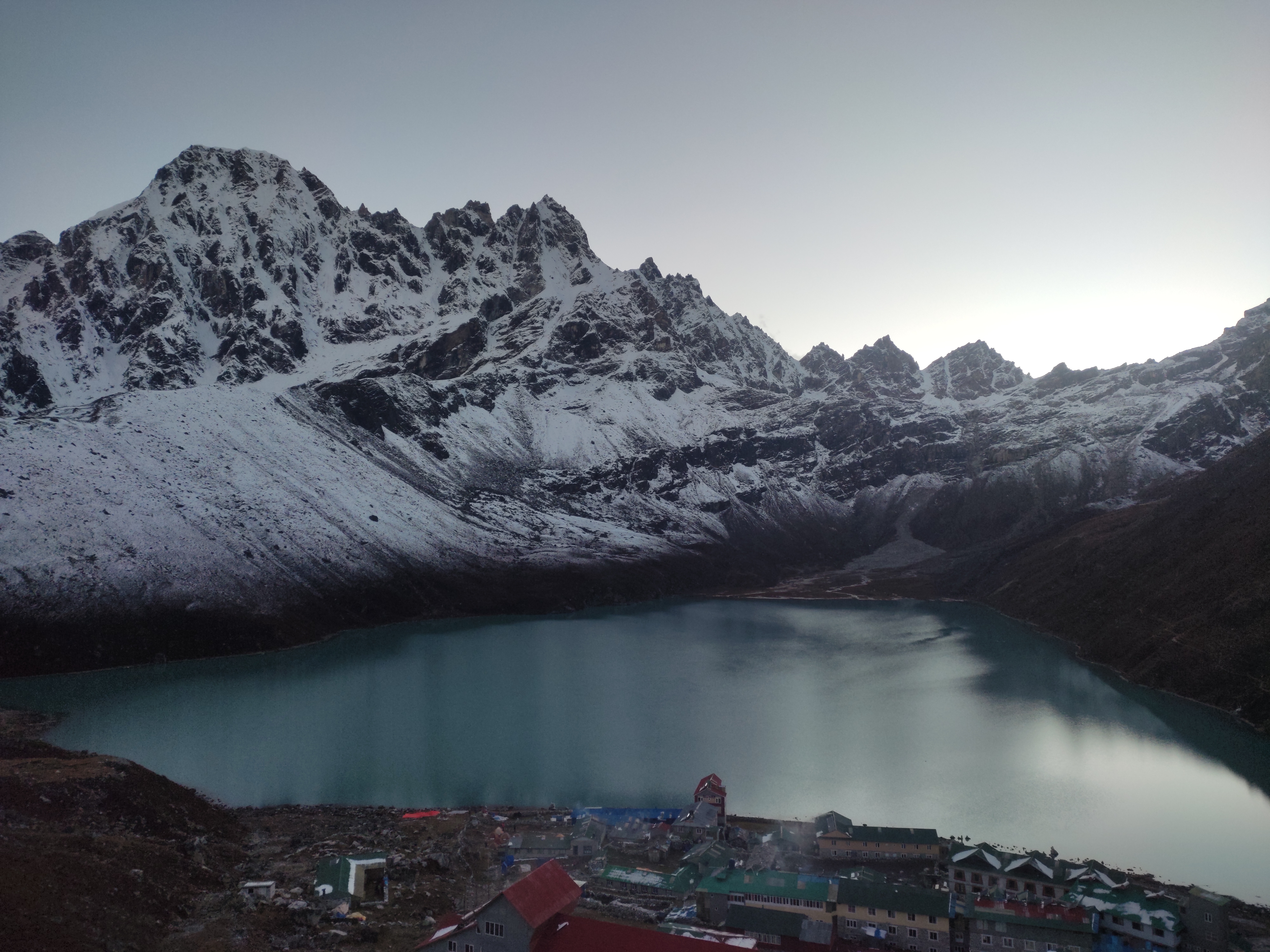






The Gokyo Lake Trek is a spectacular journey into the heart of the Everest region, offering an unforgettable combination of pristine alpine lakes, towering Himalayan peaks, ancient Sherpa villages, and breathtaking mountain scenery. This trek follows a quieter route than the classic Everest Base Camp trail, making it an excellent choice for trekkers seeking both natural beauty and a more peaceful Himalayan experience.
The highlight of the trek is the sacred Gokyo Lakes, a series of six glacial lakes nestled at high altitude and considered among the world's highest freshwater lake systems. Along the way, you'll walk through rhododendron and pine forests, cross suspension bridges over the Dudh Koshi River, explore traditional Sherpa settlements, and trek alongside the impressive Ngozumpa Glacier—the longest glacier in Nepal.
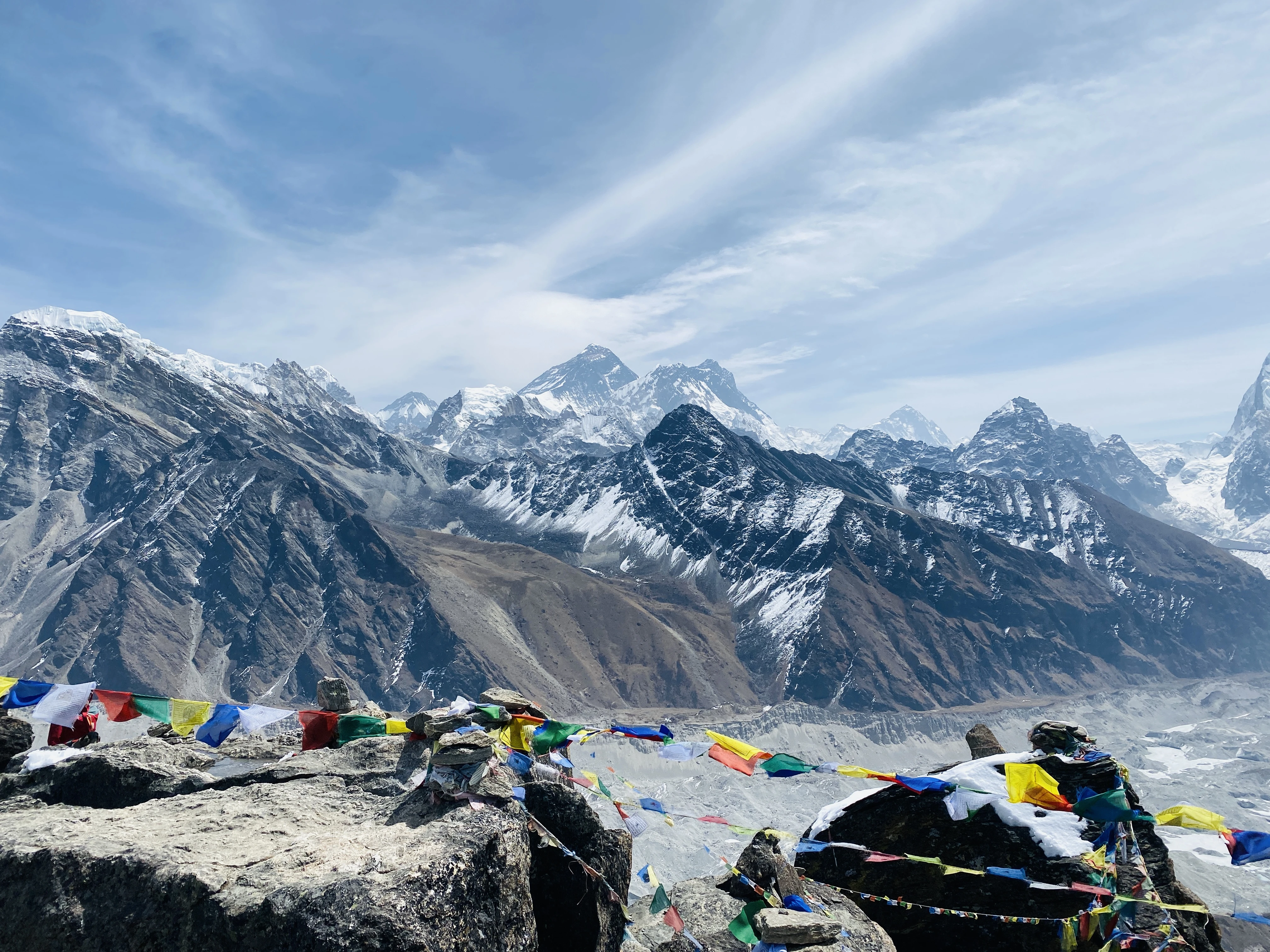
One of the most rewarding experiences is the early morning climb to Gokyo Ri (5,357 m). From the summit, you'll witness one of the finest panoramic views in the Himalayas, including Mount Everest, Lhotse, Makalu, Cho Oyu, and countless surrounding peaks.
Designed with proper acclimatization days in Namche Bazaar and Gokyo, this itinerary provides a comfortable pace that helps reduce the risk of altitude sickness while allowing plenty of time to enjoy the culture, landscapes, and mountain lifestyle of the Khumbu region.
Whether you're an experienced trekker or an adventurous first-time visitor to Nepal, the Gokyo Lake Trek offers an exceptional Himalayan experience away from the crowds.
Welcome to Nepal! Upon your arrival at Tribhuvan International Airport, our representative will greet you and transfer you to your hotel in Kathmandu. After checking in, you can relax after your journey or take a short walk around the lively streets of Thamel, the city's popular tourist hub. In the evening, you'll meet your trekking guide for a trip briefing where you'll receive important information about the trek, weather conditions, and final preparations.
Today is dedicated to preparing for your Himalayan adventure. After breakfast, enjoy a guided sightseeing tour of Kathmandu's UNESCO World Heritage Sites, including Pashupatinath Temple, Boudhanath Stupa, and Swayambhunath (Monkey Temple). Later, return to Thamel to purchase or rent any remaining trekking gear. Your guide will conduct a final equipment inspection and answer any questions before the trek begins.
An early morning scenic flight takes you to Lukla, one of the world's most exciting mountain airports. During the short flight, enjoy incredible aerial views of the Himalayan range. After meeting the rest of the trekking crew, your adventure officially begins.
The trail descends gently through beautiful forests, traditional Sherpa villages, prayer wheels, mani stones, and suspension bridges following the Dudh Koshi River. Today's walk is relatively easy, allowing your body to adjust to the mountain environment.
Today's trek is one of the most exciting days of the journey. Following the Dudh Koshi River, you'll cross several iconic suspension bridges decorated with colorful prayer flags before entering Sagarmatha National Park.
After lunch at Jorsalle, the trail begins a steady uphill climb through pine forests toward Namche Bazaar. On a clear day, you may catch your first glimpse of Mount Everest before reaching the bustling Sherpa town.
Namche Bazaar is the commercial center of the Khumbu region and offers cafés, bakeries, gear shops, and spectacular mountain scenery.
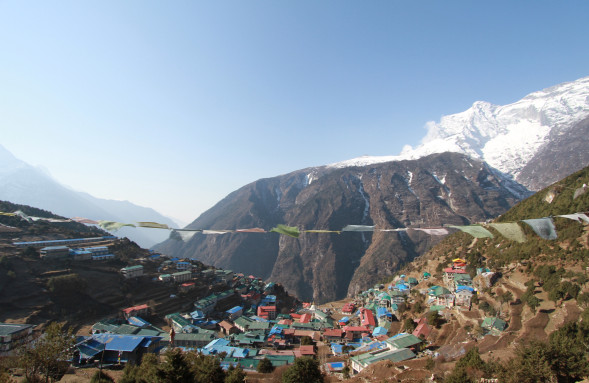
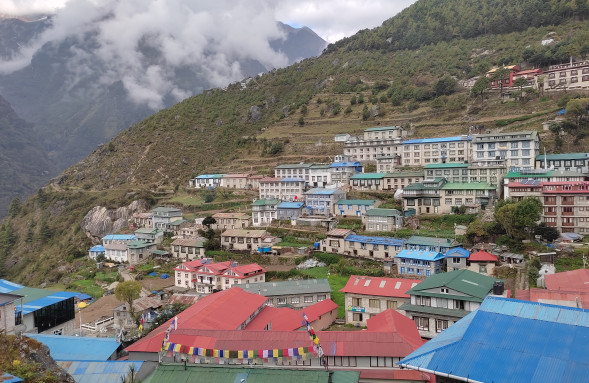
Proper acclimatization is essential for a safe trek. Instead of resting completely, you'll take a short hike to a higher elevation before returning to Namche to sleep.
A popular excursion is to the Everest View Hotel, where you'll enjoy panoramic views of Everest, Ama Dablam, Lhotse, Thamserku, and other Himalayan giants. Many trekkers also visit the nearby Sherpa village of Khumjung, home to an ancient monastery and the famous Hillary School.
The afternoon is free to relax at a café, visit the Sherpa Museum, or explore the local market.
Leaving the main Everest Base Camp trail behind, you'll enter the quieter Gokyo Valley. The route traverses high above the valley with magnificent mountain views before descending to Phortse Thanga for lunch.
After crossing the river, the trail climbs steadily through forests of rhododendron, pine, and juniper to the peaceful settlement of Dole.
The atmosphere becomes noticeably quieter as fewer trekkers follow this route.
Today's trail climbs gradually through open alpine landscapes with increasingly dramatic mountain views. You'll pass seasonal yak grazing areas and small settlements before arriving in Machhermo.
Machhermo is famous for spectacular views of Cho Oyu—the world's sixth-highest mountain. In the afternoon, you may attend a short altitude awareness presentation provided by the local Himalayan Rescue Association during trekking season.
Today's trek is shorter but incredibly rewarding. The trail gradually ascends past the first and second Gokyo Lakes before reaching the breathtaking turquoise waters of the third lake, beside which Gokyo village is located.
You'll also walk alongside the massive Ngozumpa Glacier—the longest glacier in Nepal—creating a dramatic Himalayan landscape unlike anywhere else in the Everest region.
Today is both an acclimatization and exploration day.
Before sunrise, you'll hike to Gokyo Ri, one of Nepal's finest viewpoints. The summit rewards you with a breathtaking 360-degree panorama featuring Everest, Lhotse, Makalu, Cho Oyu, and countless surrounding peaks. Many trekkers consider this view even more spectacular than Kala Patthar because of the sweeping perspective over the Ngozumpa Glacier and Gokyo Lakes.
After returning for breakfast, the remainder of the day can be spent relaxing by the lakes or taking an optional walk toward the fourth and fifth Gokyo Lakes if weather and energy levels permit.
After breakfast, you'll retrace your steps through the Gokyo Valley, descending gradually past Machhermo before continuing to Dole or Mong La depending on the group's pace.
Descending allows you to breathe more comfortably while enjoying familiar scenery from a different perspective.
Today's trek continues downhill through forests and Sherpa villages. You'll reconnect with the main Everest trail before arriving at Namche Bazaar or continuing further to Monjo, depending on the itinerary and walking pace.
Enjoy a warm shower, bakery treats, and perhaps a celebratory coffee after several days in higher elevations.
Your final trekking day follows the Dudh Koshi River, crossing familiar suspension bridges and passing through charming villages before the last gradual climb to Lukla.
In the evening, trekkers often celebrate the successful completion of the journey with guides and porters over a farewell dinner.
Weather permitting, you'll board an early morning flight back to Kathmandu. The rest of the day is free for shopping, relaxing, or exploring the city's cultural landmarks.
A farewell dinner in a traditional Nepali restaurant is a wonderful way to celebrate your Himalayan adventure.
After breakfast, depending on your international flight schedule, you'll be transferred to Tribhuvan International Airport for your onward journey.
As your Gokyo Lake adventure comes to an end, you'll leave Nepal with unforgettable memories of turquoise alpine lakes, towering Himalayan peaks, warm Sherpa hospitality, and one of the world's most scenic trekking experiences. Safe travels, and we hope to welcome you back to Nepal for another adventure soon!
Let's customize this itinerary as per your time and budget, as you like.
Tick items off as you pack — your progress is saved on this device.
No gear matches that search. Try a different word.
Down jackets, sleeping bags and trekking poles can be hired or bought inexpensively in Kathmandu and Namche Bazaar — ask our team and we will arrange it before you set off.
We are a team of professionals who share a common devotion to the outdoors — government-licensed, altitude-trained, and with you from Lukla to the summit.
Our TeamMr. Gyaljen Sherpa was born and raised in the Everest region, and his Sherpa heritage gives him deep, lifelong knowledge of the mountains, local commu...
View Profile
Sikendar Chaudhary (CK) is a licensed professional trekking guide from Nepal with over 5 years of experience leading unforgettable adventures across t...
View Profile
The Gokyo Lake Trek is a breathtaking 14-day adventure in Nepal's Everest region that takes you to the stunning Gokyo Valley and its emerald glacial lakes. Instead of following the busy Everest Base Camp route, this trek offers a quieter trail with spectacular Himalayan scenery, Sherpa culture, and panoramic views from Gokyo Ri.
The standard itinerary lasts 14 days, including acclimatization days, allowing you to enjoy the trek comfortably while exploring the Gokyo Lakes and Gokyo Ri.
Highlights include visiting the beautiful Gokyo Lakes, hiking to Gokyo Ri for panoramic mountain views, exploring traditional Sherpa villages, crossing glaciers, and enjoying spectacular views of Mount Everest, Cho Oyu, Lhotse, Makalu, and Ama Dablam.
Yes. The Gokyo Lake Trek is generally considered slightly less demanding than the Everest Base Camp Trek because it does not involve reaching Everest Base Camp or crossing high mountain passes. However, it still requires trekking at high altitude.
The Gokyo Lakes are among the world's highest freshwater lake systems. Their turquoise waters, surrounded by snow-covered Himalayan peaks, create one of the most beautiful landscapes in Nepal.
Yes. Beginners with good physical fitness and proper preparation can successfully complete the trek, provided they follow the acclimatization schedule.
Absolutely. Gokyo Ri (5,357 m) offers one of the finest panoramic viewpoints in the Everest region, with breathtaking views of Everest, Lhotse, Makalu, Cho Oyu, and numerous surrounding peaks.
You'll need a Sagarmatha National Park Entry Permit and a Khumbu Pasang Lhamu Rural Municipality Permit.
Yes. All required trekking permits are included in our package.
If you book with us, we will obtain all required permits before your trek begins.
Yes. Most foreign nationals require a Nepal tourist visa, which is available on arrival at Tribhuvan International Airport or from a Nepalese embassy before travel.
Yes. Comprehensive travel insurance with emergency helicopter evacuation coverage is required for this trek.
Your policy should include medical treatment and helicopter evacuation up to at least 5,400 meters, as Gokyo Ri reaches an altitude of 5,357 meters.
Yes. An experienced government-licensed trekking guide is included in every package.
Your guide ensures your safety, leads the route, provides cultural and historical insights, and assists with logistics throughout the journey.
No. Nepal requires foreign trekkers to be accompanied by a licensed guide in national parks and protected areas.
You'll stay in traditional mountain teahouses offering twin-sharing rooms, meals, and basic facilities throughout the trek.
Most teahouses have electricity for charging electronic devices, usually for an additional fee.
Many teahouses provide Wi-Fi, although the connection may be slow or unreliable at higher elevations.
Private rooms are available in some villages but may not always be possible during the busy trekking seasons.
You'll enjoy a variety of Nepali, Tibetan, and Western meals, including Dal Bhat, noodles, soups, pasta, rice dishes, eggs, pancakes, potatoes, and sandwiches.
Yes. Vegetarian and vegan options are available throughout the trek. Please let us know your dietary requirements before departure.
Avoid untreated water from taps or streams. Drink only boiled, filtered, or purified water throughout the trek.
Yes. Most villages have small shops selling chocolates, biscuits, energy bars, and soft drinks.
Spring (March-May) and autumn (September-November) offer the clearest weather, stable conditions, and the best mountain views.
Temperatures vary by season. Nights at higher elevations can fall well below freezing, especially during autumn and winter.
Yes. Winter trekking is possible but requires proper cold-weather gear due to freezing temperatures and snowfall.
Yes. Winter trekking is possible but requires proper cold-weather gear due to freezing temperatures and snowfall.
The main concerns include altitude sickness, dehydration, cold exposure, and physical fatigue during the trek.
Walk at a comfortable pace, stay hydrated, follow the acclimatization schedule, avoid alcohol, and inform your guide immediately if symptoms appear.
Your guide will coordinate emergency assistance and helicopter evacuation through your insurance provider if required.
Bring quality trekking boots, warm clothing, thermal layers, a down jacket, gloves, sunglasses, sunscreen, a sleeping bag, trekking poles, and a comfortable backpack.
Normally, crampons are not necessary for the standard Gokyo Lake Trek. However, microspikes may be useful if snow or ice is present early or late in the season.
Yes. Trekking poles improve balance and reduce stress on your knees during uphill and downhill sections.
A 30-40 liter daypack is ideal for carrying your daily essentials while your porter transports your main luggage.
Yes. Kathmandu has numerous trekking shops where you can rent or purchase high-quality trekking equipment.
The trek begins in Lukla, which is reached by a domestic flight from Kathmandu or Manthali, depending on the season.
Yes. A domestic flight to Lukla is necessary to begin the trek, and you'll return by air after completing your journey.
Flight delays due to weather are common in the Everest region. Your guide will help adjust your itinerary or arrange the next available flight. Helicopter transfers are also available at an additional cost.



 UK Representative
  Nepal - Guide & Sales